Why blocking one number rarely works
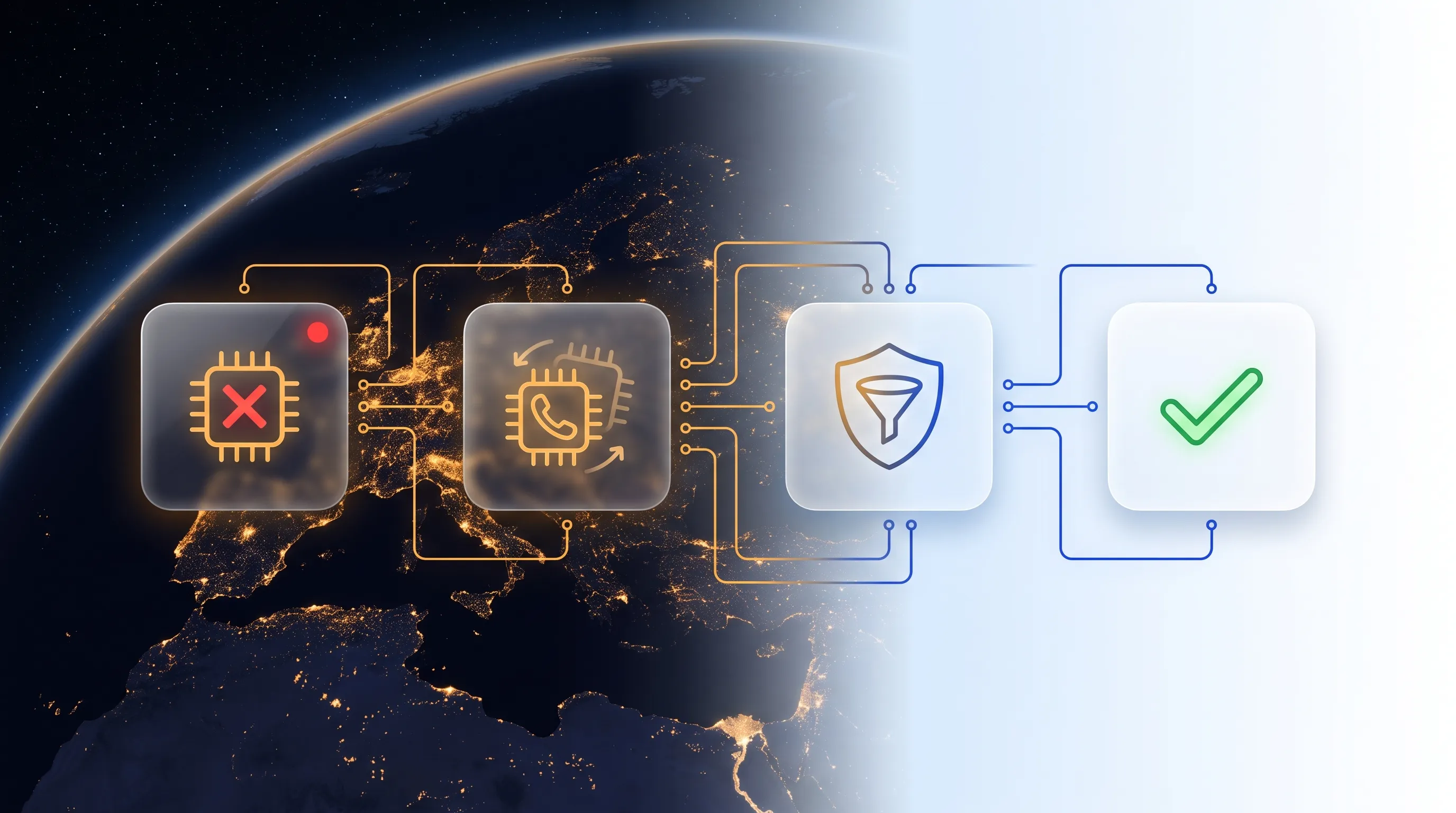
The instinctive fix — block the number that just called — solves the problem for exactly one number, once. Most robocall operations use auto-dialers that rotate through thousands of spoofed caller IDs, often faking a number in your own area code and prefix so it looks local ("neighbor spoofing"). The number displayed on your screen is frequently not the number actually placing the call, so blocking it blocks nothing the operation cares about — the next call simply spoofs a different one. This is why network-level and pattern-based blocking beats a personal blocklist for anything but a genuinely persistent, real caller.
Layer 1: carrier-level filtering (do this first)
US carriers now run STIR/SHAKEN-aware call-authentication and spam-scoring on every call before it reaches your phone, and each offers a free consumer app or built-in setting that surfaces that scoring as "Spam Likely" labels or silent blocking:
-
Verizon — Call Filter
Free tier auto-detects and labels spam, with an optional paid tier that adds a personal block list and reported-number lookup. Enable it in the Verizon app under Call Filter settings.
-
T-Mobile/Sprint — Scam Shield
Built into every T-Mobile line at no cost — Scam ID labels calls, Scam Block silently drops flagged calls entirely, and a free second number (via the app) lets you separate business/marketplace listings from your real line.
-
AT&T — Call Protect
Automatic fraud blocking plus spam-risk labeling is free on all lines; the paid Call Protect Plus tier adds reverse number lookup and a personal blocklist synced across devices.
-
Any carrier — enable Silence Unknown Callers
iOS and Android both offer an OS-level setting that sends any call from a number not in your contacts straight to voicemail, silently. It's a blunt instrument — you can miss a legitimate first-time caller — but it is the single most effective setting available if robocalls are constant.
Layer 2: the Do Not Call Registry — what it does and doesn't do

The National Do Not Call Registry, run by the FTC since 2003, is a list of numbers that legitimate telemarketers are legally required to check before dialing. Registering stops real companies — banks, insurers, home-service contractors — from cold-calling you for sales purposes, and by regulation it should measurably cut that category within about 31 days. What it cannot touch is anything already illegal: a scam operation impersonating the IRS isn't consulting a compliance list before it dials. Treat the registry as the fix for legitimate telemarketing noise, not scam-call volume.
Layer 3: report what gets through
Filing a complaint with the FTC after an unwanted call takes under a minute at reportfraud.ftc.gov, and it isn't a symbolic gesture — this exact complaint data is published by the FTC as a public dataset, and it's the same real government source this site's own spam-detection gauge is seeded from. Individually, one report against one number rarely moves fast; in aggregate, thousands of independent reports against the same number are precisely the pattern regulators and carrier blocklists use to act. In our own current dataset, the most commonly reported call subject by a wide margin is "Reducing your debt (credit cards, mortgage, student loans)" — a useful reminder that debt-relief robocalls are, right now, the single largest reported category, not IRS or tech-support scares as the stereotype suggests.
Checking a specific number before you decide
Before blocking or calling back a number you don't recognize, run it through the reverse phone lookup — it shows the registered location, carrier, line type and, critically, whether that exact number already has FTC or community spam reports against it, with a "Low / Moderate / High risk" gauge. A VoIP carrier paired with existing reports is close to a confirmed spam signal; a household-name mobile carrier with zero reports and a plausible local area code usually isn't. The full triage playbook — voicemail check, pattern matching, verification via independent channel — is in our who called me guide.
What doesn't help (and wastes your time)
Frequently asked questions
Does the National Do Not Call Registry actually stop robocalls?
It stops legal telemarketing from real companies, which was most of the call volume when the registry launched in 2003. It does nothing against scam robocalls, because scammers are already breaking the law by definition and a registry has no enforcement mechanism against operators who never planned to comply. Register anyway at donotcall.gov — it costs nothing and does cut legitimate telemarketing within about a month.
Why do robocalls keep coming from my own area code?
Neighbor spoofing — autodialing software fakes the caller-ID number to match your own area code and prefix, because people are statistically more likely to answer a number that looks local. The number on your screen is not the number that's actually calling. Blocking it does nothing since the next call will spoof a different local-looking number; the fix is your carrier's STIR/SHAKEN-aware spam filter, not a personal block list.
Will reporting a number to the FTC actually do anything?
Individually, one report rarely triggers action — but in aggregate, FTC Do Not Call complaint data is exactly what regulators and carriers use to identify patterns and build blocklists, and it's the same public dataset this site's spam-detection feature is built on. Filing takes under a minute at reportfraud.ftc.gov and adds your data point to the pool everyone else benefits from.
Do call-blocking apps actually work?
Reasonably well for known, previously-reported numbers, since they cross-reference community and carrier blocklists — but they can't catch a number that has never been reported before, and they add a third party with access to your call metadata. Your carrier's built-in spam labeling (Verizon Call Filter, T-Mobile Scam Shield, AT&T Call Protect) uses the same network-level signals for free without that extra data-sharing step, and is worth trying first.
Can I sue a company for illegal robocalls?
Yes — the Telephone Consumer Protection Act (TCPA) allows $500–$1,500 in statutory damages per illegal call to a residential or mobile line without consent, and small-claims court is a realistic venue since you don't need to prove financial loss, only that the call happened. The catch is identifying a real, serviceable defendant — spoofed numbers and shell operations behind scam calls are frequently unreachable, which is why TCPA suits work best against real businesses that hire sloppy telemarketing vendors, not anonymous scam rings.