Start with the two-minute triage
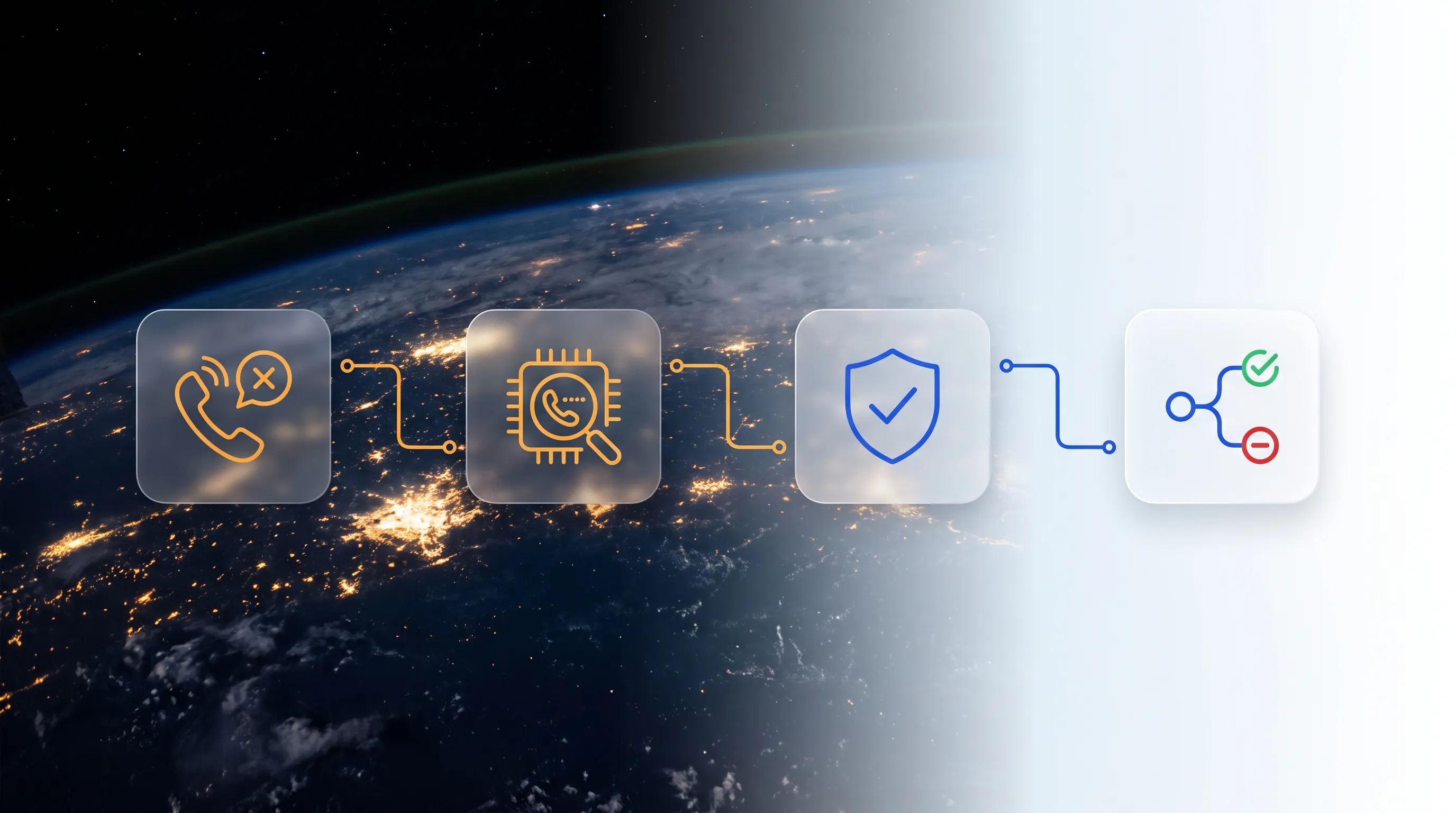
-
Check for a voicemail first
Legitimate callers with real business — clinics, banks, employers, couriers — leave messages. Robocallers almost never do. A silent missed call already leans spam.
-
Look the number up
The lookup takes ten seconds. Note three fields: the carrier (household name vs. VoIP wholesaler), the location (does it match who the caller could plausibly be?), and the spam gauge.
-
Cross-check the story
If a voicemail claims "your bank" or "Amazon", never use the caller's number. Dial the number on your card or in your account app. Identity claims are only as good as the channel you verify them through.
-
Act: return, ignore, or block-and-report
Clean + plausible → call back. Unclear → wait; real callers try again or text. Flagged or implausible → block on your phone and report at donotcall.gov so the next person's lookup shows the warning you wished you had.
Decode the caller by pattern, not just number
After analyzing complaint data, unknown callers fall into a handful of recognizable patterns. Match yours:

What you can and cannot learn — the honest table
| Question | Answerable? | How |
|---|---|---|
| Where is the number registered? | Yes | Public NANPA / libphonenumber records — the lookup shows it instantly |
| Which company issued it? | Yes | Carrier-of-record field; also the standalone carrier lookup |
| Is it mobile, landline or VoIP? | Yes | Line-type field — VoIP is the caution flag |
| Have others reported it? | Yes | Spam gauge, seeded from FTC complaint data |
| The owner's name? | No | Held privately by carriers — any "free name lookup" is a paid-broker funnel |
| The phone's live location? | No | Technically impossible from a number; claims otherwise are scams |
Frequently asked questions
Someone keeps calling and hanging up — who is it?
Ring-and-hang patterns are usually autodialers testing whether your line is live, or wangiri bait if the number is international. Look the number up; if it shows a VoIP carrier or foreign country you have no ties to, block it and do not call back.
Can I find out who called me for free without an account?
Yes — the reverse phone lookup shows the number's registered location, carrier, line type and complaint history instantly, with no sign-up. What no free service shows is the owner's name; that data is not public.
A "missed call" text asked me to click a link — is it real?
No. Voicemail-notification texts with links ("You have 1 new voicemail") that don't come from your carrier's official shortcode are phishing (smishing). Check voicemail by dialing it directly, never through a texted link.
Why did a debt collector call me about someone else?
Recycled numbers. Your number's previous owner left a trail. Tell the collector the person is unreachable at this number — under the FDCPA they must stop. A lookup of your own number can reveal what carriers still associate with it.
How do I stop the calls completely?
Register on donotcall.gov (stops legal telemarketing), enable your phone's unknown-caller silencing and your carrier's free spam filter, and report repeat offenders to the FTC. The full walkthrough is in our blocking & reporting chapter.